Flat roof, and why that matters to some buyers
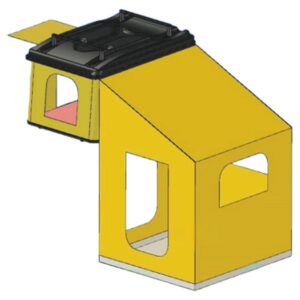
Everything in the T21 family slopes. The T22A does not. A flat lid gives a cleaner roofline, and for customers mounting the tent on a vehicle that already carries a roof box, a light bar or a ladder, the flat profile is what they ask for on sight.
Water management is handled the same way regardless: no seal strip across the crown. The aluminium sheet is continuous where a seal would normally sit, so there is no joint to dry out, lift and start weeping. The edge construction is gap-free, which matters more on a flat lid than a slanted one because water leaves the shell instead of running off it.
Opens at the front and rear
This is the practical difference from the T21 series. The T22A opens at either end of the vehicle, so a customer can set up from the tailgate or from the front, whichever side their pitch or their awning layout favours. On tight pitches, or when the rear of the vehicle is against a bank or a hedge, that choice decides whether the tent is usable at all.
20 cm body, two mattress options
A 20 cm body sits between the slim models and the flagship. Mattress comes in 3 cm or 5 cm, and the shell is deep enough that a 5 cm mattress does not fight the lid when closed. One side slot is standard; roof rails are optional rather than included, which keeps the base price down for buyers who will never carry anything on top.
Sizing
Two shells: the T22-130 sleeps one to two at 65 kg, closing to 130×200×20 cm; the T22-150b sleeps two to three at 71 kg, closing to 150×210×20 cm. Both open to 102 cm of headroom. That is a lower opening height than the T21 family by design — the flat, shallower shell trades standing room for a lower closed profile and a flatter look.